Search for hooda math unblocked and you will find two very different groups of people asking the same question. The first group is students on a school network who want a quick, fun game that actually loads. The second is teachers and parents who want the opposite of a random game portal: short, skill-based activities that a class can use without ads, pop-ups, or an account.
This guide is for both. It explains why Hooda Math unblocked often works where other game sites fail, what unblocked games Hooda Math should really mean for learning, and how to use the games in a classroom, a study hall, or a kitchen table at home.
Why school filters block math games
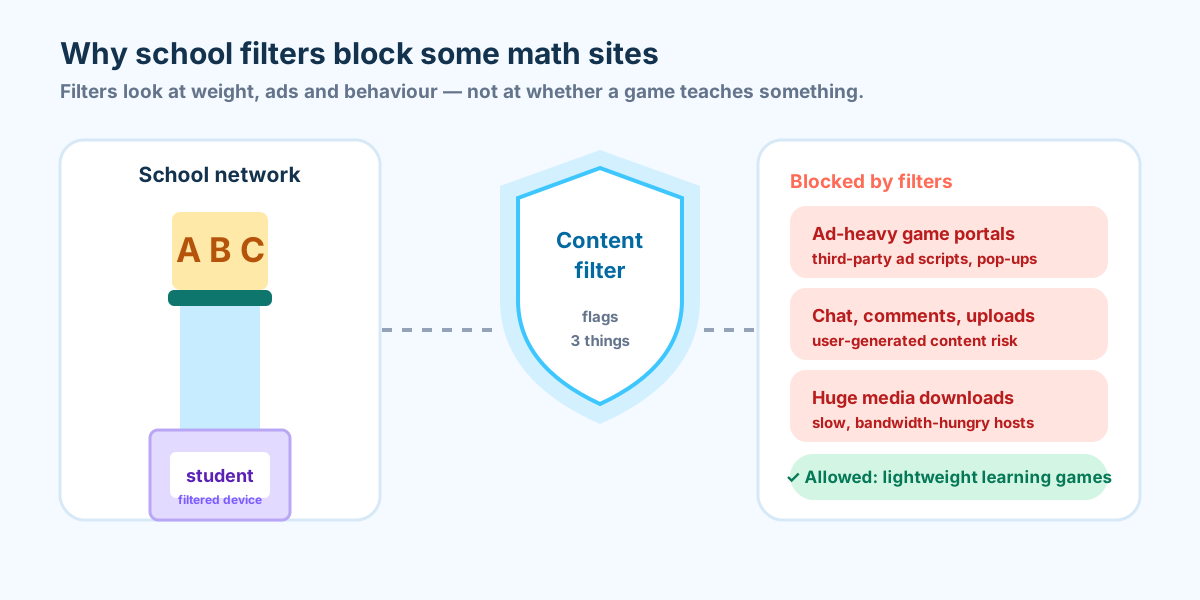
School networks rarely block a site because it is a game. They block sites because of how those sites behave. A content filter is looking at weight, risk, and behaviour — not at whether a game teaches anything.
The usual triggers are:
- Third-party ad scripts. Ad networks inject code from many external domains and can serve unexpected creative, so many districts block them outright.
- Pop-ups and full-screen overlays. Fight-or-flight advertising is flagged quickly, especially on student devices.
- User-generated content. Chat boxes, comment threads, and upload areas create moderation risk, so filters treat them as unsafe by default.
- Huge media files. Video-heavy game hosts eat bandwidth on shared school connections, which makes them prime filter targets.
- Mixed content and redirect chains. Sites that bounce visitors through several domains look like a tracking risk.
A lightweight math arcade sits on the safe side of every one of those checks. Classroom-friendly games are small, focused, and behaviourally predictable, which is exactly what a filter wants to see.
What “unblocked” should really mean
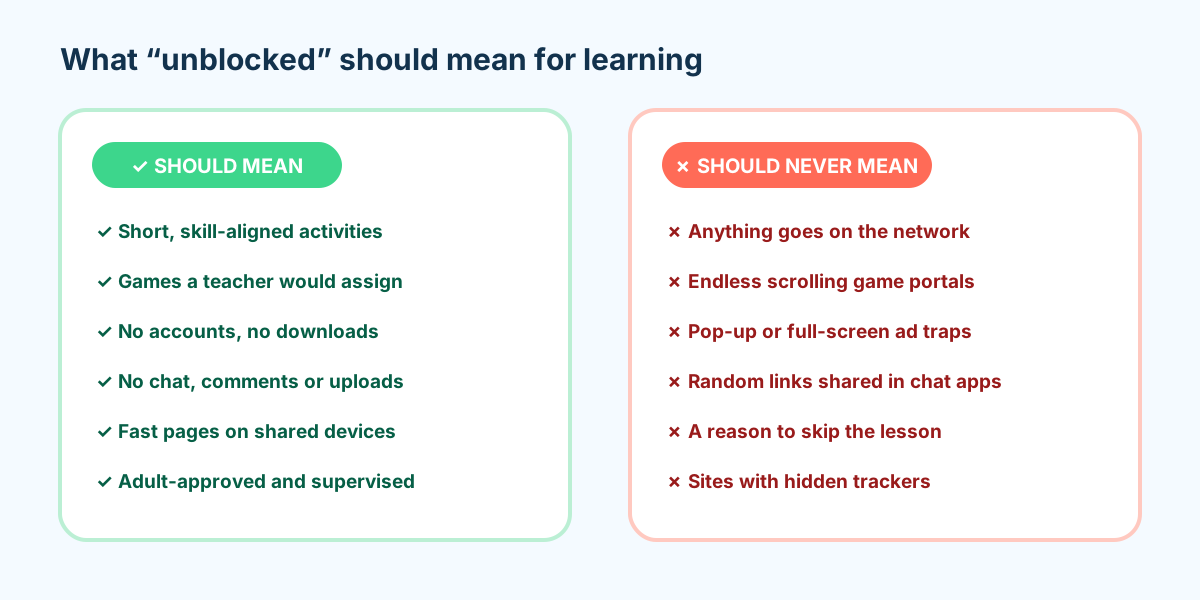
Unblocked does not mean “anything goes.” A site that loads is not automatically a good use of class time. For learning, unblocked should mean access to short, skill-aligned activities that an adult would happily assign.
| Unblocked should mean | Unblocked should never mean |
|---|---|
| Short, focused five-minute rounds | Endless scrolling portals |
| A single clear learning goal | A reason to skip the lesson |
| No accounts, no downloads | Sign-ups, codes, or installs |
| No chat, comments, or uploads | Open chat with strangers |
| Fast pages on shared devices | Pages that stall on school Wi-Fi |
Everything on this arcade is built for the left column. Every title teaches one skill, every round lasts seconds rather than hours, and there is nothing to sign into.
The five checks that make a math site unblocked-friendly
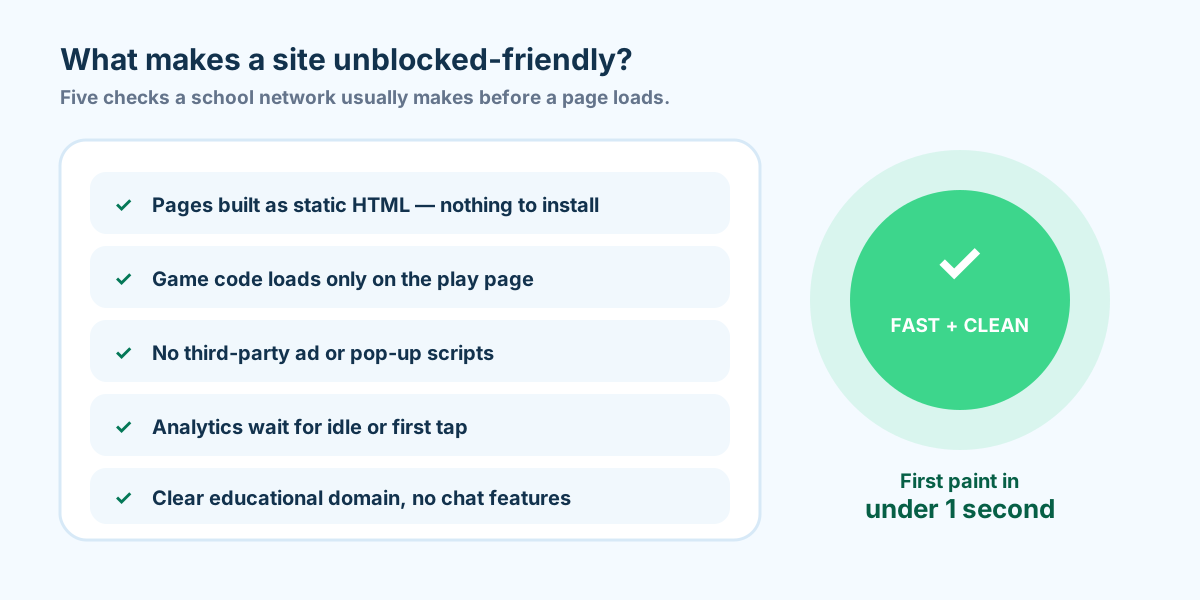
If a game page will not load at school, one of these five things is usually missing. They are also the checklist we build against.
- Static pages. Every page is generated ahead of time as plain HTML, so there is nothing to install and nothing to compile in the browser.
- Game code loads only where it is needed. On the home page you see text and links; the heavier game logic downloads only on the play page you open.
- No third-party ad or pop-up scripts. There are no ad networks, no interstitials, and no redirect chains.
- Analytics wait their turn. Measurement scripts are deferred until the browser is idle or the visitor interacts, so first paint stays fast.
- A clean educational domain. No chat, no comments, no user uploads, no public profiles — nothing a filter needs to block.
If a campus filter still rejects a page, ask IT to allow this domain the same way they allow other curriculum tools. Explaining that the site has no ads, no accounts, and no user content is usually all it takes.
A quick tour of the unblocked arcade
The arcade is organised into three sections so you can pick a skill instead of scrolling. Every card links to a single play page that boots the game right there — no separate download, no store listing, no sign-in.
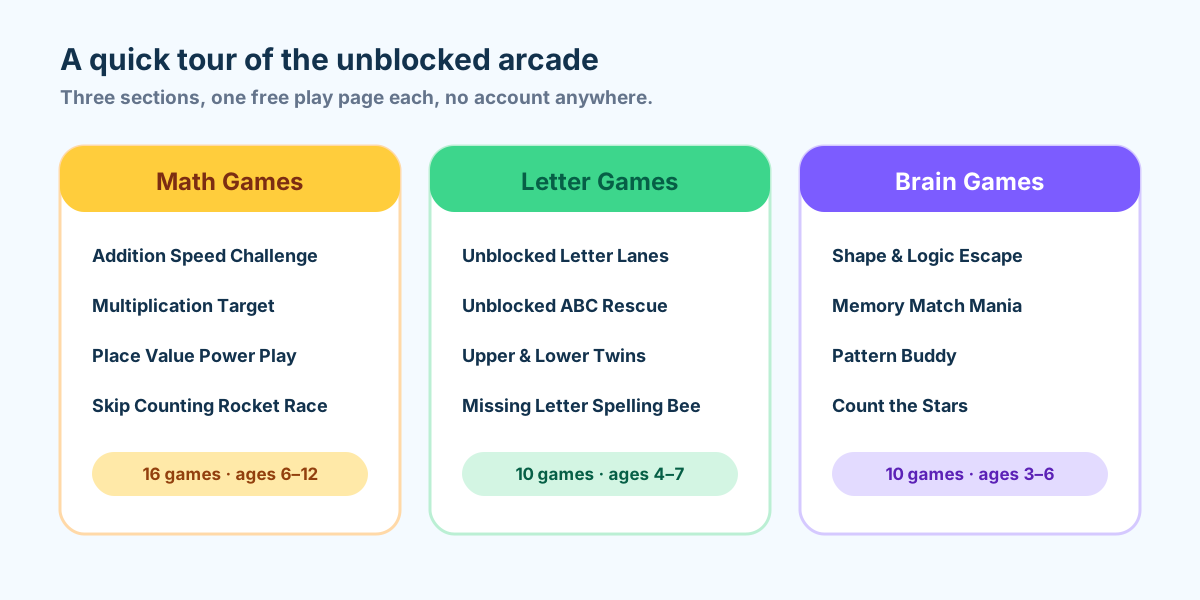
Math games (ages 6–12)
Sixteen titles cover the arithmetic that fills most elementary homework: Addition Speed Challenge, Subtraction Rescue, Multiplication Target, Division Dash, plus number-sense favourites like Place Value Power Play, Skip Counting Rocket Race and Fraction Pizza Party.
Letter games (ages 4–7)
Ten early-literacy games cover letter names, sounds, ABC order and easy words. Two of them were built specifically for this guide: Unblocked Letter Lanes asks children to clear the blocked lane that shows the target letter, and Unblocked ABC Rescue hides one letter out of an alphabet row and asks the reader to work out which one is missing. Pair them with Upper & Lower Twins and Missing Letter Spelling Bee for a full phonics session.
Brain games (ages 3–6)
Ten calm visual puzzles train attention and working memory: Shape & Logic Escape, Memory Match Mania, Pattern Buddy and Count the Stars. They make excellent quiet-time activities after a busier lesson.
Browse everything at once on the all Hooda Math games index.
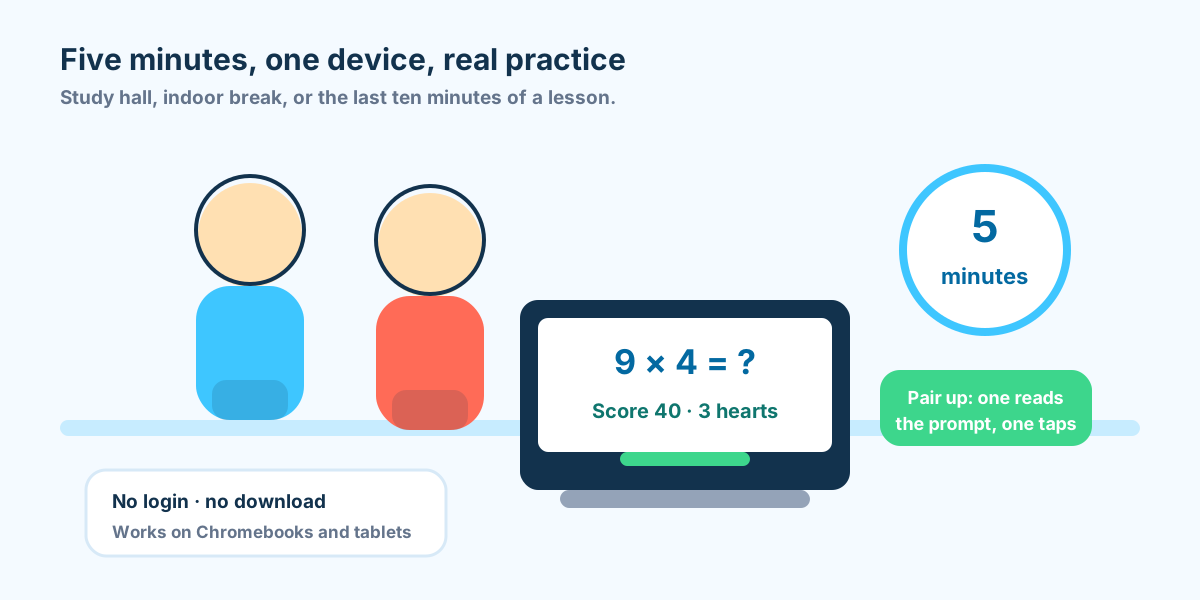
Five minutes at a time: students using unblocked math games
The best thing about a genuinely unblocked game is that it fits the gaps in a school day. Not the whole lesson — the gaps.
- Study hall or indoor break. One 60-second round per player, then pass the device. Everyone gets a turn, nobody waits four minutes.
- Station rotations. A math station, a reading station, and a device station. Because no one has to log in, the device station starts instantly.
- Early finishers. Instead of a filler worksheet, send the child to one specific game and one specific skill.
- Reading buddies. With the letter games, one partner reads the prompt aloud while the other taps. Both are practising.
Parent and teacher tips that actually work
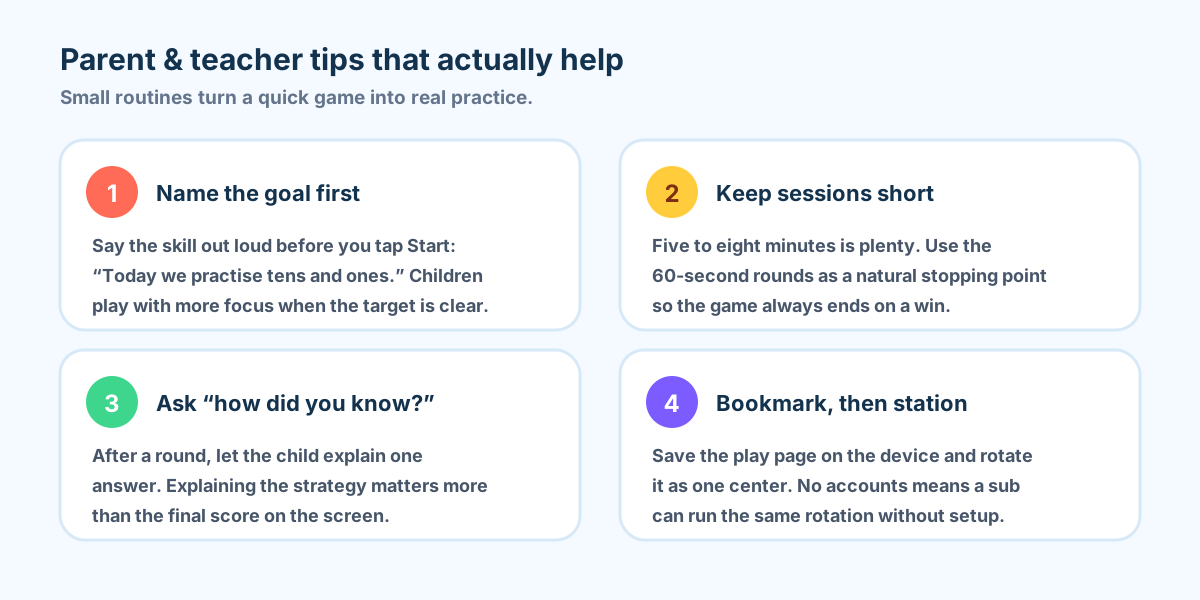
A game does not teach by itself. These four habits turn five minutes of tapping into five minutes of learning.
- Name the goal first. Say the skill out loud before pressing Start: “Today we are practising tens and ones,” or “We are looking for the letter that comes next.” Children play with far more focus when the target is explicit.
- Keep sessions short. Five to eight minutes is plenty. The 60-second rounds give you a natural stopping point, so the session always ends on a win rather than a fade-out.
- Ask “how did you know?” After a round, pick one answer and ask the child to explain it. Reasoning out loud is worth more than the final score on screen.
- Bookmark, then rotate. Save the play page on the device and treat it as one activity in a rotation. Since there is no account, a substitute teacher can run the same rotation without any setup.
 ## Why gamified practice sticks
Worksheets ask for the same skill many times and give no feedback until an adult marks the page. A well-built game flips the order: the feedback arrives immediately, and the repetition hides inside play.
- Instant feedback. A tap is answered in about a second, so the learning happens while the rule is still in the child’s head.
- Low fear of failure. Three hearts and a Play Again button make a wrong answer cheap. Children keep trying instead of shutting down.
- Repetition without boredom. Because each round is generated fresh, a child can practise the same skill fifteen times in five minutes and never see an identical screen twice.
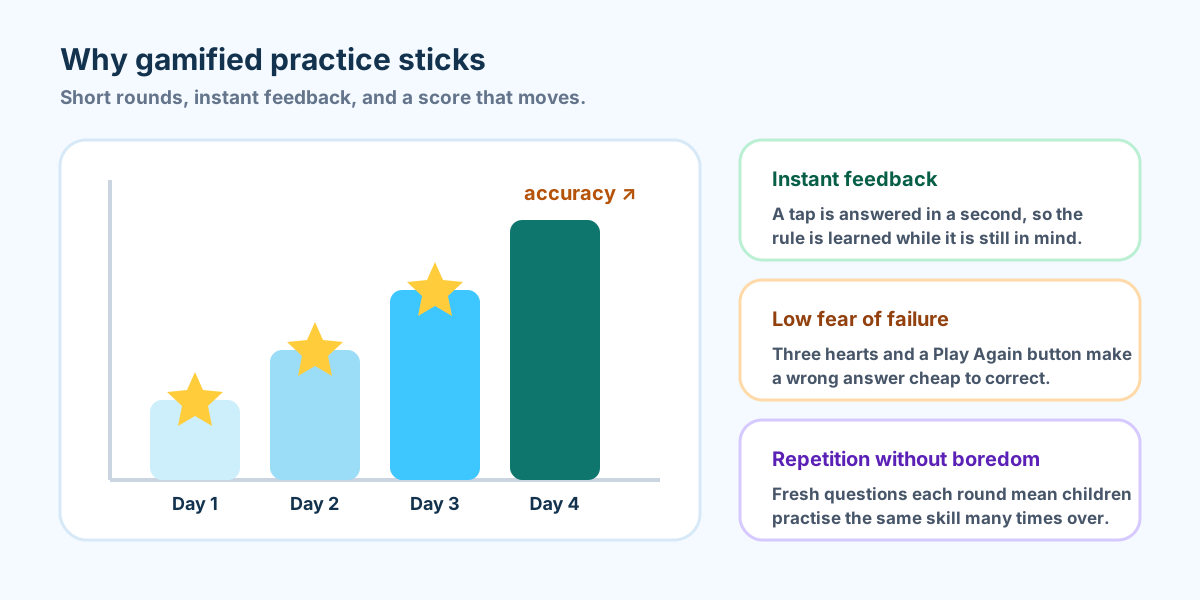
Every title on this arcade uses the same structure: a clear prompt, a small number of choices, a score, a timer, and three hearts. The game never repeats a question inside one play session, so accuracy improves because of thinking rather than memory of a previous screen.
Quick answers about Hooda Math unblocked
Is Hooda Math unblocked at school?
It is built to be. Pages are static, there are no ad scripts or pop-ups, no accounts, and no user-generated content — the things filters usually flag. If your district still blocks it, ask IT to allow the domain like any other curriculum tool.
Do the games need an account, download, or install?
No. Open a play page, press Start, and the game runs in the browser. Nothing is stored except your score for the current round, and closing the tab ends the session.
What ages are the games for?
Math games suit ages 6–12, letter games suit ages 4–7, and brain games suit ages 3–6. Each play page states the age range and the exact skill it practises.
Is it safe for children?
There is no chat, no commenting, no uploads, and no external user content. Analytics are anonymised and load only after the page is idle or the visitor interacts with it.
What if a game page still will not load?
Try a different title first — a single page may be cached unusually. If nothing loads, the block is at the network level, so the fix is a filter allow-list request rather than a browser setting.
Are the games really free?
Yes. Every game is free to play in the browser, with no trial timer and no paywall in front of a level.
Next steps
Start with one math game and one letter game. Addition Speed Challenge is the quickest way to see how the rounds work, and Unblocked Letter Lanes shows the same structure on the reading side. Then bookmark the all-games index so a device is always two taps from a usable activity.
For more background, read Unblocked Hooda Math Games That Load Fast for network specifics, What Is Hooda Math? for the big picture, and browse the rest of the Hooda Math guides for classroom and at-home routines.
That is the honest version of unblocked games Hooda Math: free access to short, skill-based games that load on the devices children actually use — plus an adult who knows which skill the five minutes are for.